
By: Samaila Adelaiye, PhD, Research & Policy Fellow
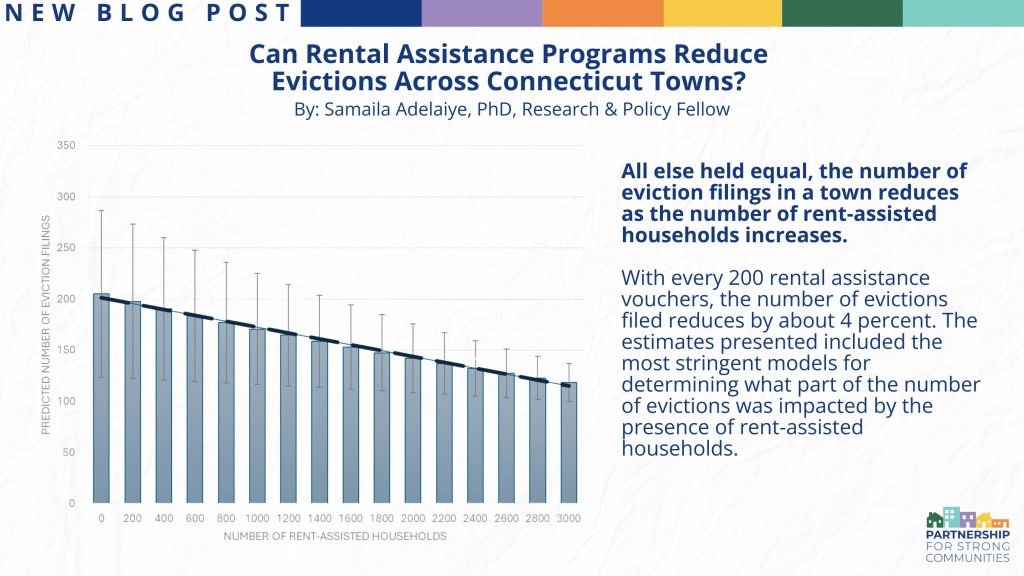
Rental assistance aims to address housing affordability, thus increasing access to safe and affordable housing. But what impact do these programs have on protecting people from involuntary displacement? In Connecticut, it is estimated that 1 in 20 renter households have evictions filed against them each year. This would suggest that it is rare, but 5 percent of renter households is a lot. It even becomes more jarring when we break the demographics down as Black renters are overrepresented in eviction filings, making up a quarter of households who have eviction filed against them while making up only 15 percent of renter households. Evictions present a significant threat to housing stability for renters, particularly those more economically vulnerable.
A large share of evictions results from non-payment of rent, so there is a strong economic angle to losing one’s home. Historically, people living in poverty, those who have faced unemployment, and lower-income households often find themselves at the receiving end of evictions. This goes beyond their inability to make rent payments on time to include the fact that a highly commodified housing market may result in opportunities to charge higher rents, and this incentivizes landlords to want to evict current tenants to take advantage of the opportunity to find tenants who can pay higher rents. In Connecticut, rent costs have increased, and wages have not kept pace.
How can rental assistance influence eviction filing risks? Rental assistance is a subsidy that makes housing more affordable for vulnerable renters. Connecticut’s Rental Assistance Program (RAP) and the Federal Section 8 Housing Choice Voucher (HCV) Program subsidizes rent for thousands of Connecticut residents. But beyond ensuring that they can afford their rent, these programs ensure that they are in better quality homes and that their rights are protected. Supported tenants have some protections from evictions, and these programs also tend to have grievance procedures that reduce the likelihood of evictions.